Testimonials
Amazing holiday in the Dolomites
We thoroughly enjoyed our holiday in the Dolomites – we did the Sella Grand Tour (Discover the Dolomites). Collett’s gave us a detailed walking pack. Transfers to and from the airport were very good and well organised. The hotels we stayed in were very good. Great food and friendly staff.
We thoroughly enjoyed our holiday in the Dolomites – we did the Sella Grand Tour (Discover the Dolomites). Collett’s gave us a detailed walking pack. Transfers to and from the airport were very good and well organised. The hotels we stayed in were very good. Great food and friendly staff.
 See Trustpilot Review
 Fantastic
Fantastic holiday overall!
Fantastic holiday overall!
Frequently Asked Questions
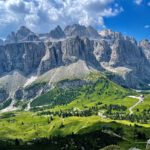
The Sella massif (also known as the Sella group) is a prominent mountain group in the Dolomites of northern Italy, located in the regions of Trentino-Alto Adige and Veneto. It forms a roughly circular plateau of rugged peaks, steep cliffs, and deep valleys, with elevations reaching over 3,000 meters. The massif is famous for its dramatic scenery, including sheer rock faces, alpine meadows, and high mountain passes, making it a popular destination for hiking, climbing, skiing, and via ferrata routes. Trails around the Sella Massif offer walkers a mix of challenging ascents, panoramic viewpoints, and access to traditional mountain huts (rifugio), showcasing the Dolomites’ unique limestone formations and breathtaking alpine landscapes.
The Sella massif in the Dolomites is surrounded by four major valleys: Val Gardena to the north, Alta Badia to the east, Val di Fassa to the south, and Val di Livinallongo (Arabba) to the west. Each valley provides access to different faces of the massif, with scenic villages, hiking trails, and mountain passes. Together, they form a natural quadrangle around the Sella, making it a hub for circular walks, via ferrata routes, and panoramic alpine treks.
Walkers exploring the four valleys around the Sella Massif can expect a spectacular mix of alpine scenery. The Val Gardena offers lush meadows, forested slopes, and charming villages framed by towering Dolomite peaks. The Alta Badia presents rolling pastures, traditional Ladin settlements, and dramatic cliffs rising from the valley floor. In Val di Fassa, hikers encounter high mountain passes, glacial lakes, and rugged limestone formations, while Val di Livinallongo (Arabba) combines steep, rocky slopes with panoramic views of the Sella’s western face. Throughout all four valleys, the landscape alternates between verdant valleys, jagged peaks, and serene alpine trails, offering walkers constant variety and breathtaking vistas.